Seattle’s new public restrooms should open without a phone
The City Council kept restroom funding in the 2027 budget. The city’s plan calls for up to 10 modular units.
Seattle’s City Council voted 7–2 on Friday to pass a 2027 budget that keeps funding for more public restrooms. Mayor Katie Wilson confirmed Saturday that the money survived the vote. I’d spend it. I’d also put a condition on the city’s next restroom contract: a person who walks up for the first time, without a phone or a card they had to get somewhere else, must be able to open the door during posted hours.
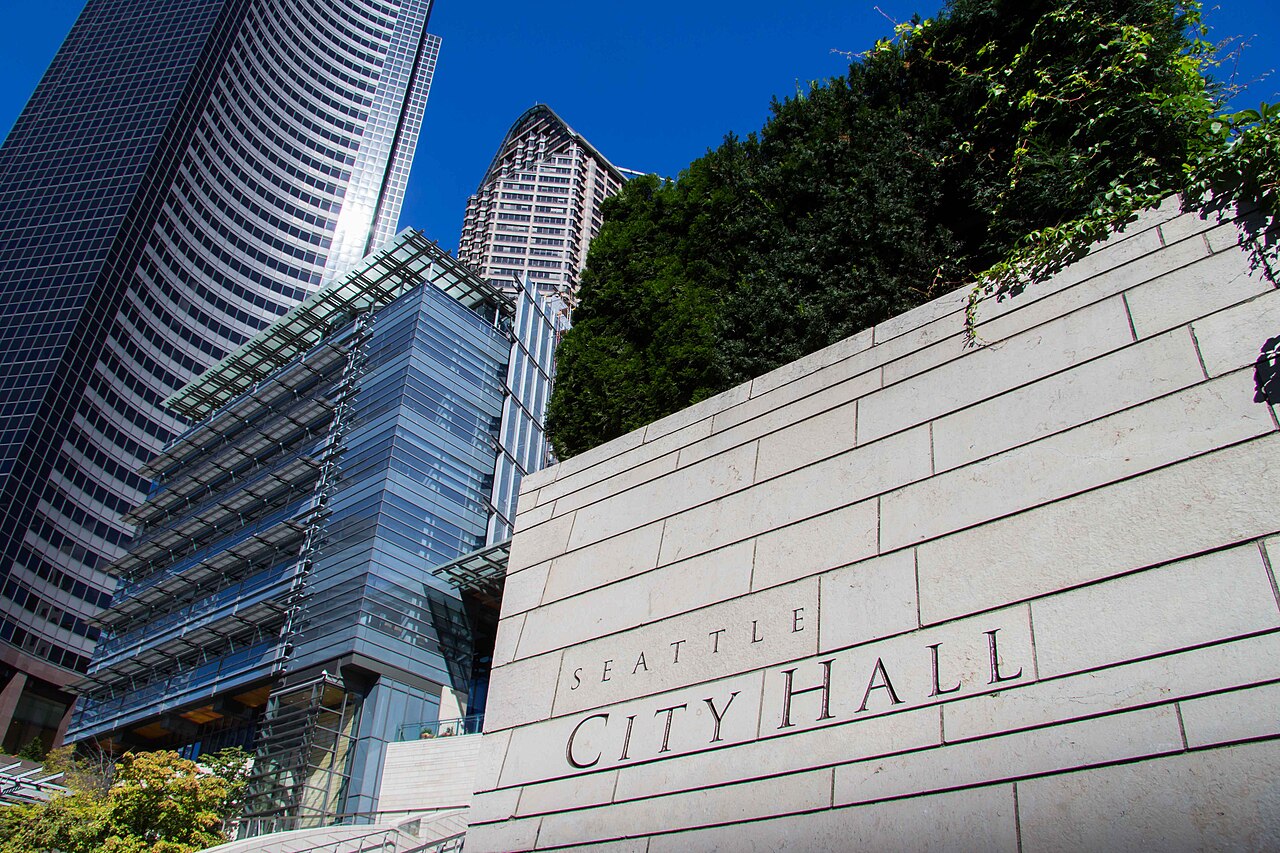
Photo credit
What Seattle voted to buy
The restroom provision survived a fight over how the city pays for the services it intends to keep. When council members debated funding for parent education and preschool co-ops, one argument for the money was that it could tide the program over until the state stepped in. Councilmember Maritza Rivera asked what would happen if the state didn’t. It’s the right question for a city paying recurring bills out of money it has only once. It’s also a question you can ask of a toilet, right down to who buys the soap next year.
Wilson’s September proposal treated the modular restrooms as an ongoing expense. It put $1.4 million a year in the Department of Finance and Administrative Services budget to contract for up to ten units of the kind Seattle has been trying downtown. The proposal also set aside $1.8 million in parks funding for two permanent restrooms: one at Cheryl Chow Park in Rainier Valley and one in northeast Seattle, at a site to be chosen. Money proposed for renovating existing park bathrooms is a separate pot. Those proposal figures describe the plan that went to the council, not a signed purchase order or a list of opening dates.
A project can use one-time money to put a building in a park. It will still need someone to open and clean that building on Sunday. Meanwhile, a rental or service contract can include cleaning and repairs but end without leaving the city a facility it owns. Each can make sense. Neither relieves the council of deciding what it wants residents to be able to do, at which hours, and for how many years.
That decision shouldn’t wait until a bidder presents the city with a list of features. If a facility is meant for whoever is on the sidewalk, requiring visitors to be able to get in from the sidewalk is part of buying it. A city’s procurement team can ask for that as plainly as it can ask for running water.
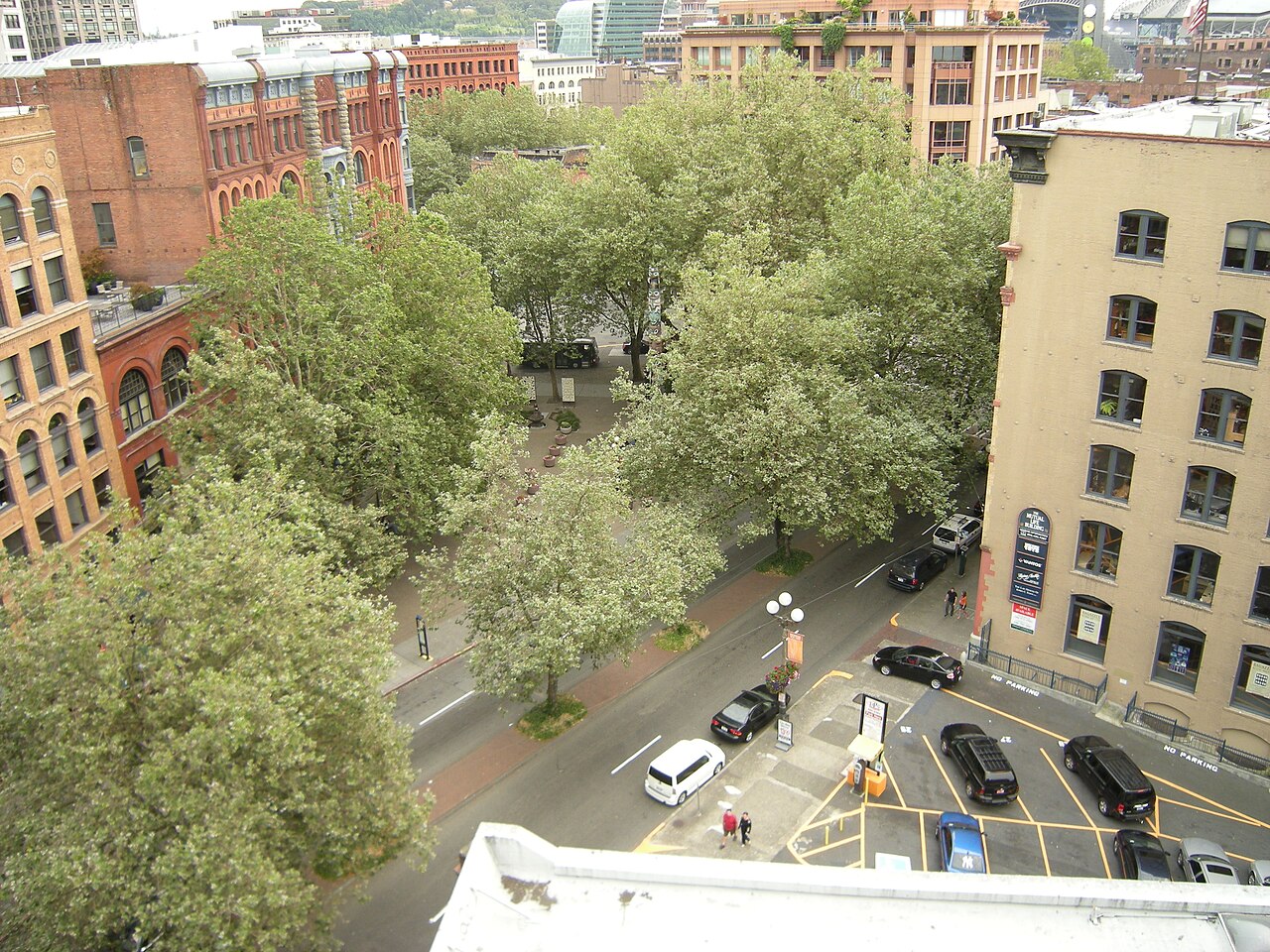
Photo credit
A door on South Washington Street
In May the city put two modular Throne Labs toilets near Second Avenue South and South Washington Street and two outside Lumen Field, ahead of the World Cup. The Transportation Department advertised free entry from 7 a.m. to 10 p.m. and ten minutes per visit. The pilot units do things a basic portable toilet doesn’t: there’s running water, a place to change a baby, and a maintenance crew that can be sent when a tank runs low or a visitor reports a problem. The units have their own tanks, so the city didn’t have to find a sewer hookup at each corner.
If you walked up to one at launch, you could open it by scanning a code, texting or using the app. Texting matters because you don’t need a smartphone to do it. If you don’t have any phone, the company offers a tap card through a community partner that can register you for one. The city said it would train downtown ambassadors and members of its CARE team to assist. Those are real accommodations. They are also different instructions from the one you get at an ordinary park restroom: turn the handle if the place is open.
Take the city’s launch hours as a test schedule, not as a current listing. At noon, the relevant question for a first-time visitor is whether there is a phone-free way in right there. At 9:50 p.m., ten minutes before closing, it’s the same question, with fewer places likely to be open to send the visitor for help. A card in a pocket works at either hour. A card a stranger has to collect first only works if the place issuing it is open, close by and known to the stranger. A helper works if one is actually there.
Put a contactless entry option on the door if it makes it easier to move around with a wheelchair or bags. Keep the app for people who want to check whether a unit is free. The city can still offer a button that opens the door without an account, or pay for an attendant who can admit someone throughout the published window. If the operator says an attendant is the only safe way to provide that access at a particular site, price those shifts. A phone-free route that closes several hours before the phone route is a shorter service, and the city should say so.
There’s a good reason to keep some units movable. In July the city agreed to move the two by Lumen Field after a neighboring property owner appealed on historic-district grounds. A unit on a truck is easier to relocate than a room attached to a sewer. But from the sidewalk a move is a closure until the replacement opens and the signs change. If a unit earns a permanent place, use the pilot to learn which corners work when there’s no match on. After a move, give the old site a sign directing people to an open door, with actual hours. Don’t make them discover the change in an app.
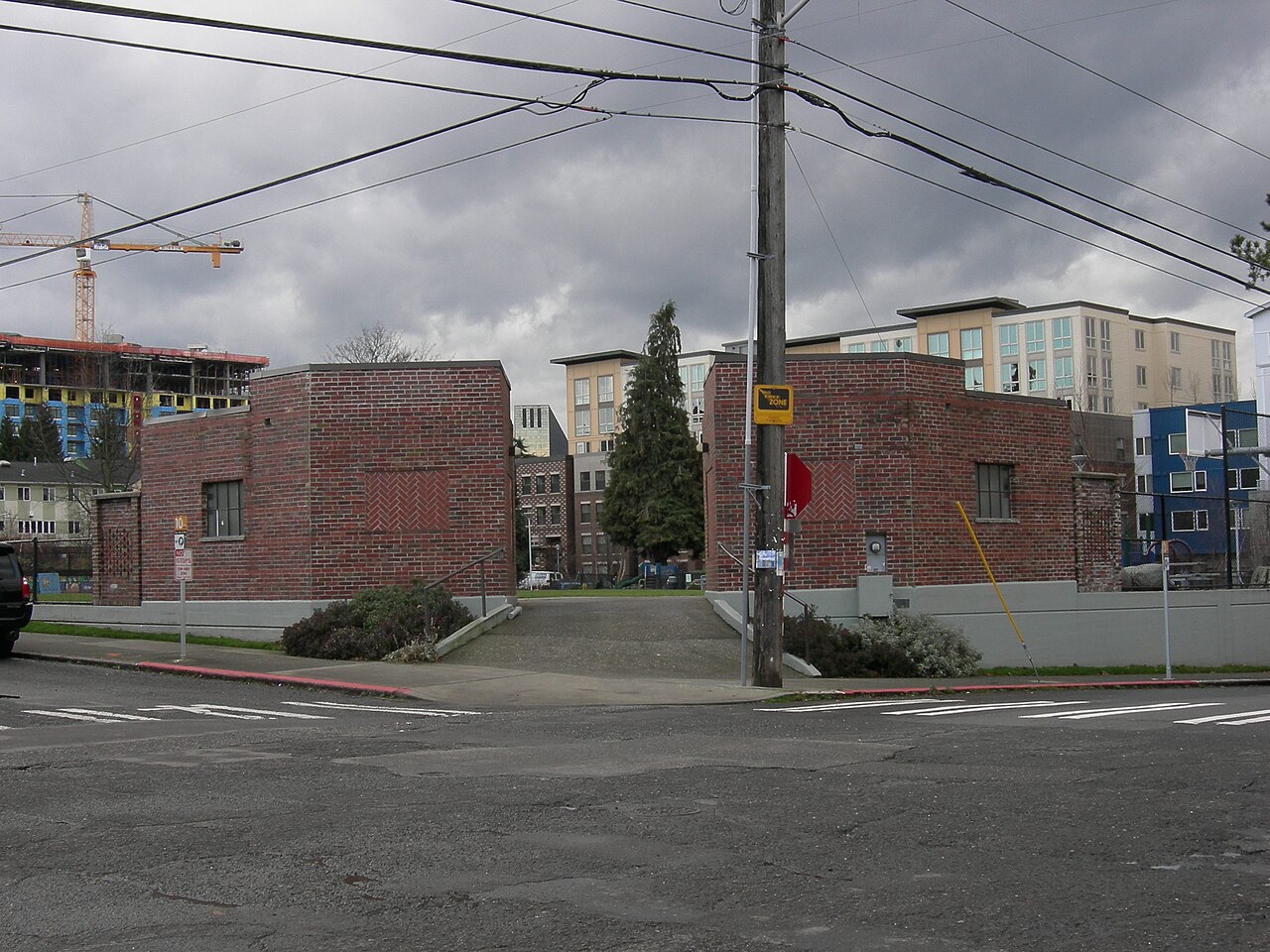
Photo credit
Count the doors that open
Seattle’s city auditor has already done a version of this test. In a 2025 report, five of 50 restrooms auditors checked for availability were shut even though the city’s online dashboard showed them open. Two of those five had no sign explaining the closure. That was a sample of park facilities, not a current closure rate and not a test of the Throne pilot. It does show what a public map can get wrong. A map can have the right address and still send a visitor to a locked door.
The audit also found conflicting answers about who was responsible for locking park restrooms and gaps in the records that would show how often staff cleaned them. Parks reported in the auditor’s follow-up that it had piloted new cleaning standards, started regular inspection work and hired more seasonal help. That’s a good start. The next step is to be able to say which cleaning round actually happened, at which facility, without asking the worker at the end of a shift to reconstruct a whole route from memory.
There’s an argument for the managed units here. A crew that knows the tank is nearly empty can go straight to the problem. The crew comes with the contract rather than appearing as a separate request the following year. Reporting on the pilot put the annual price at about $116,000 per unit, including the unit and its upkeep. That’s a price for a particular service, at particular sites. To compare it with a permanent facility, the city should count plumbing and construction up front and then put the staff, supplies, repairs and hours on the same page. Comparing the cost of pouring concrete with the annual cost of a staffed or serviced restroom leaves out the work that makes either one usable.
I’d give the city’s contract manager a way to check what the operator says. Visit unannounced during posted hours, sometimes near closing, with a dead phone or no phone at all. Ask people with different mobility and access needs to test the route from the sidewalk, and pay them for their time. Record each door failure and how long it took to restore service. Use a separate spot check for the condition of the sink, floor and changing table. A log that says a cleaner was dispatched tells the city when a task started; a check after the visit tells it whether the room was fit to reopen.
At each site, publish the hours people can count on, including any hours when an attendant is the only way in. Keep a number where the public can report a broken lock, but put the backup directions on the site itself. If you’re already at the door, the useful information is where to go. A city contract manager should be able to look up how long the first door has been down without having to ask every person who tried it for a phone number.
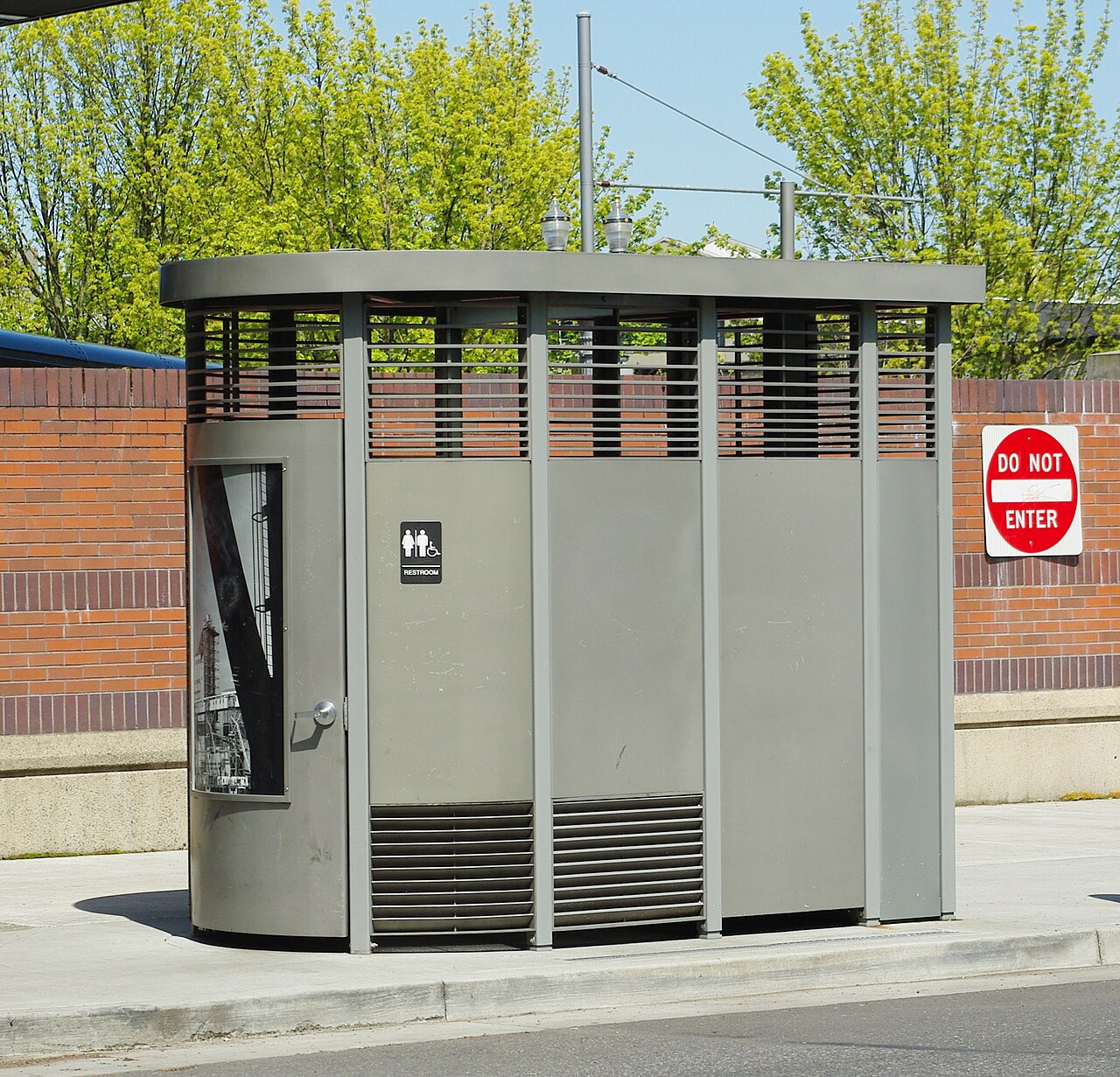
Photo credit
Pay for the hours
The strongest case for access controls is that a torn-up restroom serves nobody. The vendor says it can restrict people associated with damage; a city deciding whether to keep that option should ask how often it prevented a repeat incident, and how often an exclusion was mistaken. When staff have to clean up after vandalism, other stops on their route may wait. The parks audit describes the effects that reactive work and staffing limits have on maintenance. A site that goes through two afternoons with a broken latch needs someone with a spare part and a deadline to bring it. Nobody should have to fight for a replacement each time.
The city can set that deadline without making an ordinary bathroom visit a transaction tied to a person. Start with door counts or time in use in aggregate, which can help set cleaning schedules. Keep the actual maintenance and closure records available to the public, by site and time. If a vendor argues a particular safety feature needs identifiers, make it explain why, what it keeps, for how long and how someone can challenge a mistaken exclusion. Seattle shouldn’t have to buy a long record of individual visits in order to know how often a door was open.
Locations and hours are the trade-off the council ought to own. Keeping a few doors open later costs money. Some sites will cost more to clean than others, and an accessible entrance on paper can turn out to require site work. If the available money won’t cover ten reliably open doors, I’d open fewer with hours we can afford and disclose which neighborhoods are still waiting. Protect the park money separately: an older restroom that can be brought back into daily service may help more people than another unit in a neighborhood that already has one. For the same reason, I wouldn’t reserve all the later hours for the blocks that have the biggest summer crowds.
Don’t leave that choice solely to the vendor or to a map of the places that are easiest to service. Ask the people who open the parks and clean the rooms where the work fits on their route. Ask transit riders and night-shift workers where most of the other doors close. Use the movable units to test two sites before paying to build at either one. If a neighborhood is given a day-only unit on purpose, put the operating cost of adding an evening shift in the next budget instead of counting the location as if the evening problem were solved.
Before renewing a contract, the council should ask how many of each site’s posted hours the operator actually delivered, and what it did about repeat closures. It can separate one-time installation costs from recurring cleaning and repair costs in the annual budget. If units are frequently dark when they are supposed to be open, withhold part of the service payment under terms laid out in the bid, or pay for an attended replacement at the sites where that is the better answer. Give the council a decision it can make on the next vote rather than another year of estimates about how many people the equipment might serve.
Before Seattle calls the first site finished, send someone there during the last half hour of a regular evening shift. Give them the directions on the sign and nothing else. If the test ends with instructions to go register for a card, leave that site off the list of completed openings until someone fixes the entrance.
Sources
- Scott Greenstone, KUOW: Friday’s vote, the competing amendments and the mayor’s response
- Nate Sanford, KNKX: the council’s final budget, short-term spending and the preschool funding debate
- Nate Sanford, KNKX: the modular restroom proposal and pilot costs
- Nate Sanford, KNKX: the agreement to move two Pioneer Square toilets
- Seattle City Clerk: 2027 budget bill, version 2
- Seattle Channel: the Nov. 20 budget debate and vote, beginning at 1:53:37
- Mayor Katie Wilson’s Nov. 21 statement on what survived the council vote
- Seattle’s budget proposal: restroom spending and capacity, pages 20–21 and 78
- Seattle Department of Transportation: Pioneer Square pilot, entry and maintenance
- Throne Labs: how users can get an access card
- Seattle’s park restroom audit: hours, inspections and maintenance, pages 6–11
- City Auditor’s follow-up on restroom cleaning standards and inspections
- Seattle Parks and Recreation: public dashboard and restroom hours