Congress should see what ICE got for its money at Camp East Montana
Trump directed contractors to alert the White House when Congress asks about their work for the executive branch. Congress should require ICE to show what it got for its money in El Paso before the agency can commit to a longer deal.
After her office visited Camp East Montana twice in August 2025, Rep. Veronica Escobar wanted to know who was supposed to answer the phone. A local legal services provider had reportedly called the El Paso immigration detention camp 25 times before someone picked up, she wrote to federal officials. Her staff had already sent questions about what they saw on their visits. ICE canceled a September follow-up visit the day before it was scheduled. Escobar put the question in writing again. What was ICE doing to make sure the phone got answered around the clock?
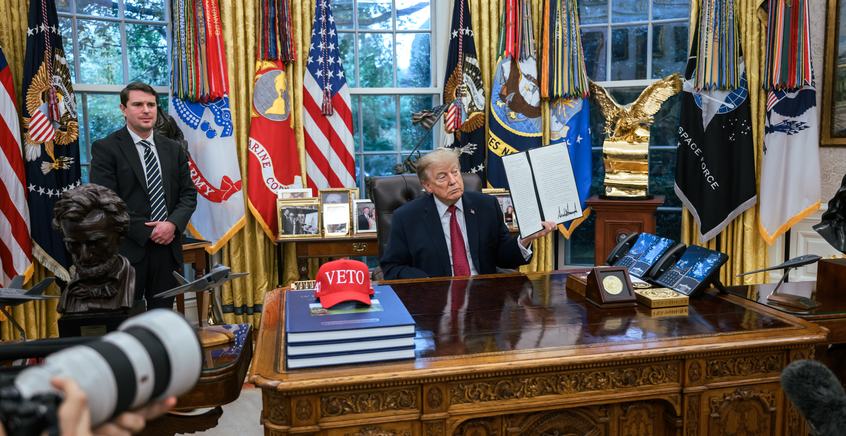
On Nov. 20, President Trump signed an executive order requiring federal contractors and covered subcontractors to immediately notify the White House and the contracting agency of pending or future congressional requests about their work or communications with the executive branch. The administration says coordination protects sensitive information and avoids duplicative work. Agencies are to coordinate responses with the White House and contractors, who must follow instructions on withholding communications determined to be privileged. Agencies must consider a response to noncompliance, up to termination or suspension as the law permits.
Before federal money can go toward a long-term extension or additional work at Camp East Montana, the lawmakers who control those funds should require ICE to show what the public got under the current deal. Apply the condition whenever ICE makes a new commitment for that work, including from funds Congress already made available. A company can run a facility. The government has to know whether a lawyer can reach a client there.
In June, the Government Accountability Office reported that ICE had skipped its required inspection before housing people at the camp. The building with private attorney visitation booths, family visiting space and a law library was unavailable for at least two weeks after opening. Meanwhile, the Army had paid full price for guards, medical services, meals and other services from Aug. 1 through Aug. 15, 2025, when nobody was held there. Auditors called up to $11.5 million of that spending waste. That September, the Army exercised the first option year on the original contract.
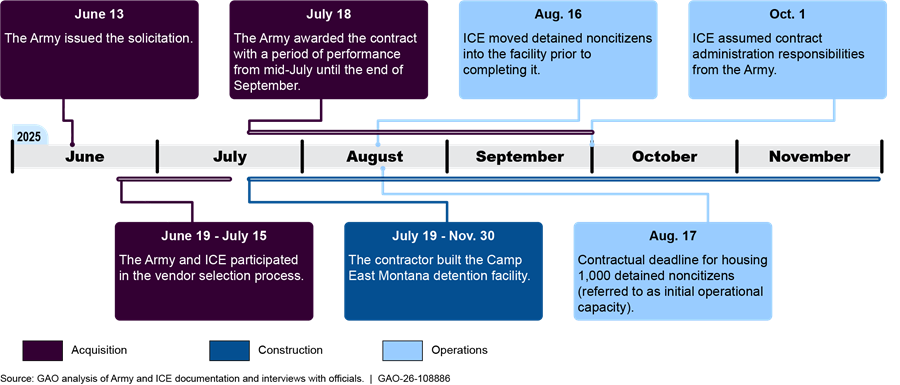
Those were findings about the original contract. According to the GAO timeline, the replacement contractor began operating the camp on April 18, 2026. ICE told The Texas Tribune the new deal would allow more on-site medical care and staff and a more precise plan for monitoring the work. The Associated Press reported in July that ICE planned to extend Amentum's deal without competition. In its revised October justification for a longer term, ICE said Amentum owned and controlled the facility infrastructure and argued that an interruption would endanger the people housed there. That dependence is a reason to know exactly what ICE can verify on its own.
ICE should keep its own inspection reports, invoices and the service logs needed to verify them, including records from subcontractors. Require regular delivery of those records into an agency-controlled system during the contract. When the operator changes, the next government inspector should be able to pull last month's records and see what the previous inspector asked the company to fix.
Start with the phone. Over a month, how many requests for private legal visits came in, how many visits took place and how long did people wait? Count requests that carried over from the previous month, and show the age of those still open. A DHS inspector outside the local ICE office should check a sample against scheduling records, test whether the booking line works across shifts and verify on site that the rooms allow private conversations. If ICE says it fixed a failure, the inspector should repeat the check and sign off with a date. People held at the camp and workers should have a way to speak privately and voluntarily with inspectors, with safeguards against retaliation.
Use the same approach on the bill. The Nov. 19 GAO report says Homeland Security agreed to tie pricing to the number of people held, and that contract terms were still under negotiation as of August. For a sample billing period, show the daily population, the meal quantities billed and the rate the agency paid. Set out any fixed charge for keeping capacity available. A reviewer should be able to tell which costs buy readiness, which rise with the number of people served and whether the invoice reflects the agreed rates.
The procurement rules DHS uses already require a record of government inspections and acceptable performance before certain contract options can be exercised. Congress should make that evidence part of the funding decision. The committees can ask ICE directly for its signed inspection and itemized bill. The order still calls for White House coordination on covered requests. With the records in ICE’s files, authorized auditors can check what the agency accepted and paid for while officials resolve any claims of privilege. Publish aggregate waits, completion rates, spending and findings, with small counts withheld where they could identify someone. Keep medical information in protected systems and omit names, the substance of legal consultations and sensitive security details from the public report.
In the November audit, ICE told GAO in August that it was working to fill 55 oversight vacancies across its field offices. Congress should fund trained federal inspectors, clinical reviewers, invoice staff and travel for on-site checks. Give the inspection team time to come back and see whether a repair held. If Congress wants a reliable answer before the next contract decision, it has to pay for the people who can get it.
If an immediate handover or transfer would interrupt treatment or put people in danger, allow a temporary extension for essential services, up to 30 days at a time. Require a senior DHS official to document the specific risk, with independent clinical review where care is at stake, and send Congress a dated plan for remedy or safe transition. Maintain access to counsel, care and safe staffing during that period. Before a transfer goes ahead, confirm that the receiving site can continue treatment and preserve access to counsel. Any further extension should require a fresh finding and documented progress. Limit the funding to essential services at the existing scale.
The House and Senate homeland security appropriations subcommittees should ask ICE now for a signed performance report for Camp East Montana. Ask for the latest inspection, the results of follow-up checks and a month of reconciled bills. In the next DHS spending bill, make that record a condition of any longer deal. Put Escobar's question near the top. Ask for the date someone last tested the phone after the day shift went home.
Sources
- Rep. Veronica Escobar · September 2025 letter about Camp East Montana
- White House · Nov. 20 order on federal contracting
- White House · Reasons given for the order
- Reuters · Order on contractor communications with Congress
- Government Accountability Office · June audit of Camp East Montana
- The Texas Tribune · ICE’s response on staffing and oversight
- Associated Press · ICE’s July plan for a no-bid extension
- ICE · October revised procurement justification
- Government Accountability Office · November audit of proposed detention spending
- FAR Overhaul · Government inspection (46.401)
- FAR Overhaul · Exercising contract options (17.204-1)