Trump’s tariffs should come with an expiration date
After losing both chambers in the midterms, Republicans should back a bill that gives most new tariffs 60 days unless Congress passes a law to keep them.

Photo credit
Six House Republicans voted in February to end the emergency Donald Trump had used to tax imports from Canada. The House passed the resolution 219 to 211. That was a Republican House with a Republican speaker and a Republican president. The six names are still there in the clerk’s record. After the November midterms, they make for better reading than another autopsy about turnout. A handful of Republicans were willing to put their names on an objection to a tax their own president wanted.
There will be more Democrats than Republicans in both chambers when the new Congress sits in January. CBS News called control of both chambers for Democrats after the November 3 election. James Talarico beat Ken Paxton in Texas. The Associated Press later called Alaska for Mary Peltola over Dan Sullivan. Republicans have plenty of races to argue about. They can spend the winter deciding whose campaign ads were worse. The next Congress will inherit a tariff system that still puts much of the decision in the president’s hands.

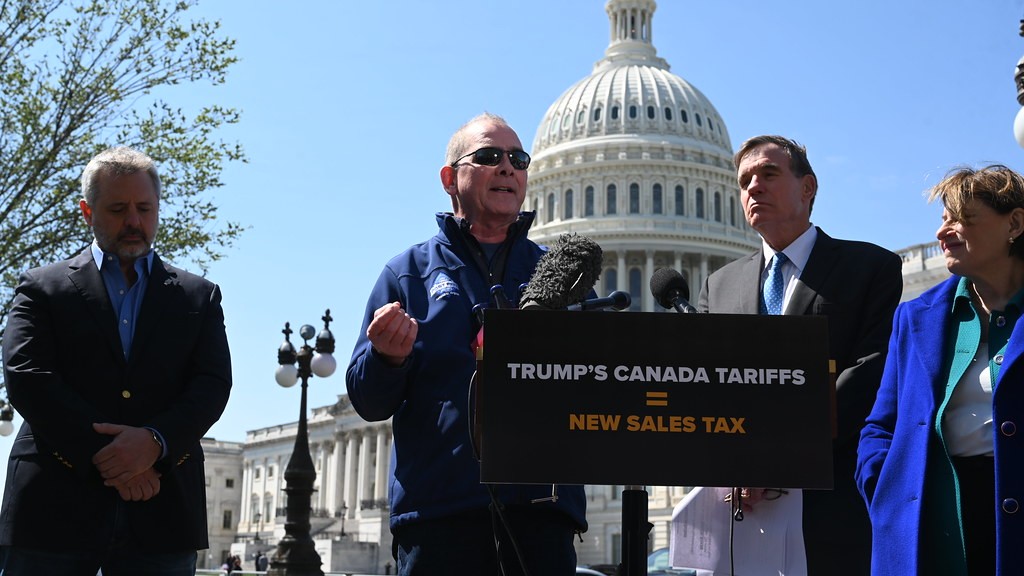
Maria Cantwell, a Washington Democrat, introduced the Trade Review Act with Iowa Republican Chuck Grassley in April 2025. The Constitution gives Congress the power to levy duties and regulate trade. Congress has handed presidents discretion under a series of laws. This bill puts a 60-day clock on most new or increased presidential tariffs. To keep the tariff after that, Congress would need to pass a joint resolution of approval and get it enacted. There’s a clock at the other end, too. Within 48 hours of imposing or increasing a duty, the president would have to send Congress the reason and an assessment of the effect on American businesses and consumers. I’d vote for that arrangement while Trump is in office and leave it in place for his successor.
Under the bill, members would have to take a vote on the tariffs they actually want to keep. A member who ran on helping the local machine shop could end up voting for a duty on a part the shop buys from abroad. The same member might have a steel mill nearby that likes the duty. Put both employers in the hearing room and ask what happens to their orders if the tariff stays. Then the member has to pick a side in public. A statement of support for American manufacturing gets considerably easier to write when someone else picks the rate.
Voters had other reasons to throw out Republicans. The AP’s survey of midterm voters found that roughly nine in ten called the cost of living a major or crucial factor in their vote for Congress. About two-thirds thought Trump’s policies had contributed to inflation. That second finding measures whom voters blamed. It can’t tell us how much of the grocery bill came from trade policy, how much came from higher fuel costs or how much was already there when Trump took office. It does leave Republicans with a question they can answer without reopening an election model. Would they vote to impose these same charges on the businesses that buy the goods?
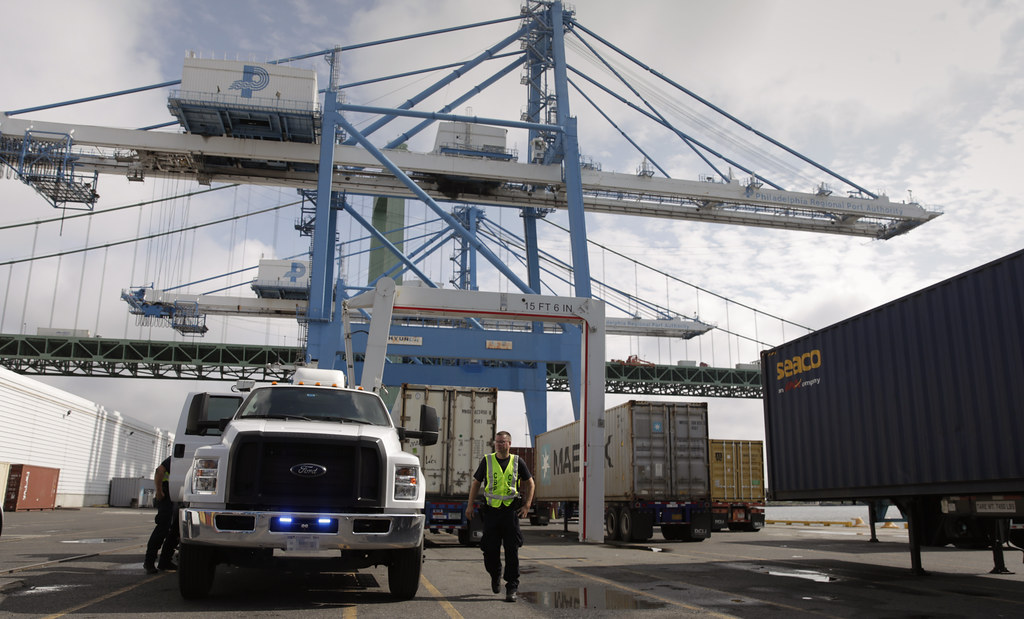
One reason to ask is the way a tariff arrives. U.S. Customs collects the duty from an importer. If a small wholesaler brings in a shipment of parts, it owes the duty even if it cannot raise the price to its customers that week. The seller abroad might eventually lower its price. The wholesaler might accept less profit or ask buyers to pay more. The importer still has to account for the bill. The party that likes low taxes should have an answer for the person who signs that check.
Thomas Gellert gave the Associated Press an example this month. His New Jersey company imports Canadian cheese. He said it was absorbing millions of dollars in additional costs and tariffs to keep selling its products. That’s his company’s account, and it has sued over the Canadian duties. If Congress holds a hearing, it can ask him to bring invoices and give a dairy producer who supports the charges a seat beside him. Both can tell the committee what they would do if the duty came off next month. They may have a harder time planning if the answer depends on the next phone call between presidents.
There is a place for a fast executive response. Suppose the government finds that a foreign supplier is evading a forced-labor ban, or that an ally has abruptly cut off a material the Navy needs. A president can have a reason to act before Congress settles a bill. The hard question comes after the first response. If officials still think a tariff is necessary two months later, they should be able to say what it has achieved and why they need more time. If the evidence cannot be made public in full, the relevant committees can hear the sensitive part. A public vote can still name the goods, the rate and the period.
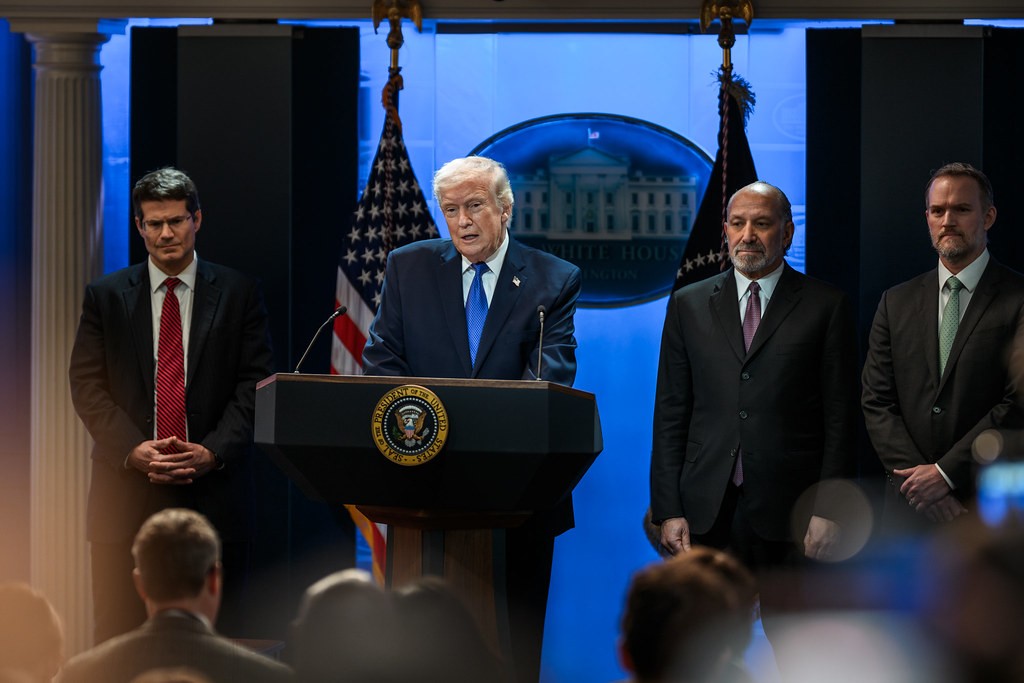
Photo credit
In February the Supreme Court ruled that the International Emergency Economic Powers Act did not authorize the tariffs Trump imposed under it. The administration moved to Section 122 of the Trade Act and put on a temporary 10 percent surcharge. That law already uses a clock. It allows duties for up to 150 days without an act of Congress extending them. The surcharge expired July 24. In the same week, the U.S. Trade Representative announced another round of duties under Section 301, this time citing what it called inadequate bans on imports made with forced labor or failures to enforce them. Those were different legal authorities. For an importer budgeting a fall shipment, they were successive reasons to open another notice and call the customs broker.
The forced-labor case deserves its own vote. A tariff on imports that compete with goods made by coerced workers can be defensible. Look at the actual remedy. In July the trade office announced duties affecting 60 economies, with different rates and exceptions. I would want to know which industries American officials expect to change their practices and when those changes would bring relief. If the government can name the conduct and explain how to verify that it stopped, members have a proposal they can judge. A charge collected indefinitely on a wide range of goods leaves Congress with an easier time making speeches than checking what worked.

Photo credit
The Biden administration offers a test for anyone who thinks this is simply a device for tying Trump’s hands. Biden directed his trade office to raise the Section 301 tariff on Chinese electric vehicles to 100 percent in 2024. There were serious questions about Chinese state subsidies and the chance that American producers would depend on Chinese suppliers for critical components. A Republican could have heard that case in committee and supported a narrow duty. I would still have required Biden to get Congress on the record within 60 days. A tariff quadrupled by a Democratic administration should face the same vote as one announced by Trump.
The law would need workable exceptions. Grassley and Cantwell already exclude antidumping and countervailing duties imposed under the law that handles those cases. That matters. A company that petitions over below-fair-value imports or subsidies goes through a different process, with findings and procedures that can be tested. There is room to argue about those rules separately. The bill is aimed at the executive decision to put on or raise a tariff. It would be a mistake to turn every calculation in a trade case into a 60-day scramble for floor time.
Sixty days will still be inconvenient. A president negotiating with another government would have to explain that a tariff might disappear if Congress refused to keep it. That can reduce leverage. It can also make an agreement easier for companies to plan around if the commitments survive a vote. A president can change the terms out of impatience with a foreign leader. A company deciding where to put a factory cares whether an agreement will still be there when the machinery is bolted to the floor. I’m willing to give up some bargaining flexibility for a trade policy that can survive the next argument on the phone.
On Friday Trump told reporters he saw room to make deals with the incoming Democratic Congress. Roll Call reported that he also described the veto as leverage. In April 2025 his administration issued a statement opposing the Trade Review Act and said Trump would veto it. Lawmakers could reintroduce the bill in January and put it on his desk. If he vetoed it, an override would require two-thirds of the members voting in each chamber. The election changed who can schedule a vote. Getting to two-thirds would take Republican votes as well.
Oregon Senator Ron Wyden told the Associated Press that he saw room for a fight over the 50 percent tariffs imposed in August on certain Canadian goods. That is a fight over a particular set of charges. The Grassley-Cantwell bill is about what happens the next time a president imposes a new one. Once the 60-day rule is law, Congress can let a covered tariff lapse by withholding approval. Put that rule in its own bill. Then a senator who wants to keep a particular steel duty can defend it in a separate vote.
Members could also improve the disclosure. I’d make the administration give the committee a sample list of actual products drawn from the customs codes in the order. For each product, show the existing duty, the new duty and who owes it. If the administration expects foreign suppliers to cut their prices, put that assumption on the page and say how it will be checked. The point of the filing is to let a member ask a question specific enough that somebody can answer it. A chart cheering for domestic investment cannot tell a pump maker whether a particular valve is about to cost more.
I would also make Congress vote on a defined term when it approves a tariff. Give the affected businesses a date they can put on a calendar. Give the committee time to check what changed before the date arrives. If a duty was supposed to bring production home, count the factory capacity that actually opened and look at how long it took. If it was supposed to force a change in another country’s law, read the law that country passed and see whether its customs agents enforce it. A member ought to have something better than the original press release in hand at renewal.
I understand why a Republican member might sit this fight out. Anyone whose district benefited from a tariff will hear directly from the employers who want to keep it. Anyone thinking about a primary can picture the president calling the bill a surrender. Legislating means accepting that sort of exposure. It also means being able to defend a particular tariff without defending the entire power to set one. I would rather hear a member give a ten-minute case for the tax his district wants than hear him promise to trust the next president with every decision the current one made.
Democrats face their own temptation. They can spend the next two years demanding that Trump consult them, then decide the consultation is a nuisance if they win the White House. The test is whether they will write the same expiration date into a law that survives January 2029. Republicans should ask them for that commitment now, while the choice is fairly cheap for both sides. They should be prepared to offer the same commitment if a future Democratic president wants protection for a favored industry and a Republican Congress has the votes to supply it.
Congress can start with the bill Grassley and Cantwell already wrote. Put a clean version through the trade committees and put the objections in the record. If the White House thinks 60 days is too short, let it bring a specific example and ask for a different number. I’d keep the 60-day limit unless the administration can show the case that actually needs longer. On day 61, the importer should be able to find the law that kept the duty alive. If there is no such law, Customs should stop collecting it.
Sources
- CBS News’s election calls for the House and Senate
- Associated Press on the Alaska Senate result
- House clerk’s roll call on the Canadian tariff emergency
- Associated Press voter survey and the cost of living
- Paul Wiseman on the Canadian tariffs for the Associated Press
- Text of the Cantwell and Grassley Trade Review Act
- Supreme Court opinion on emergency powers and tariffs
- Congressional Research Service on the tariffs that followed the ruling
- U.S. Trade Representative’s July 2026 forced-labor tariff notice
- Biden administration’s May 2024 announcement on Chinese imports
- John T. Bennett on Trump’s November 20 briefing for Roll Call
- April 2025 White House veto statement
- U.S. Customs and Border Protection on when importers pay duties
- Bill Butcher at the April 2025 tariff press conference