Voyager 1 is a light-day away and its readings have stopped coming in
A tracking dish near Madrid picked up the radio signal on Thursday. Testing a fix now takes at least two days per attempt.
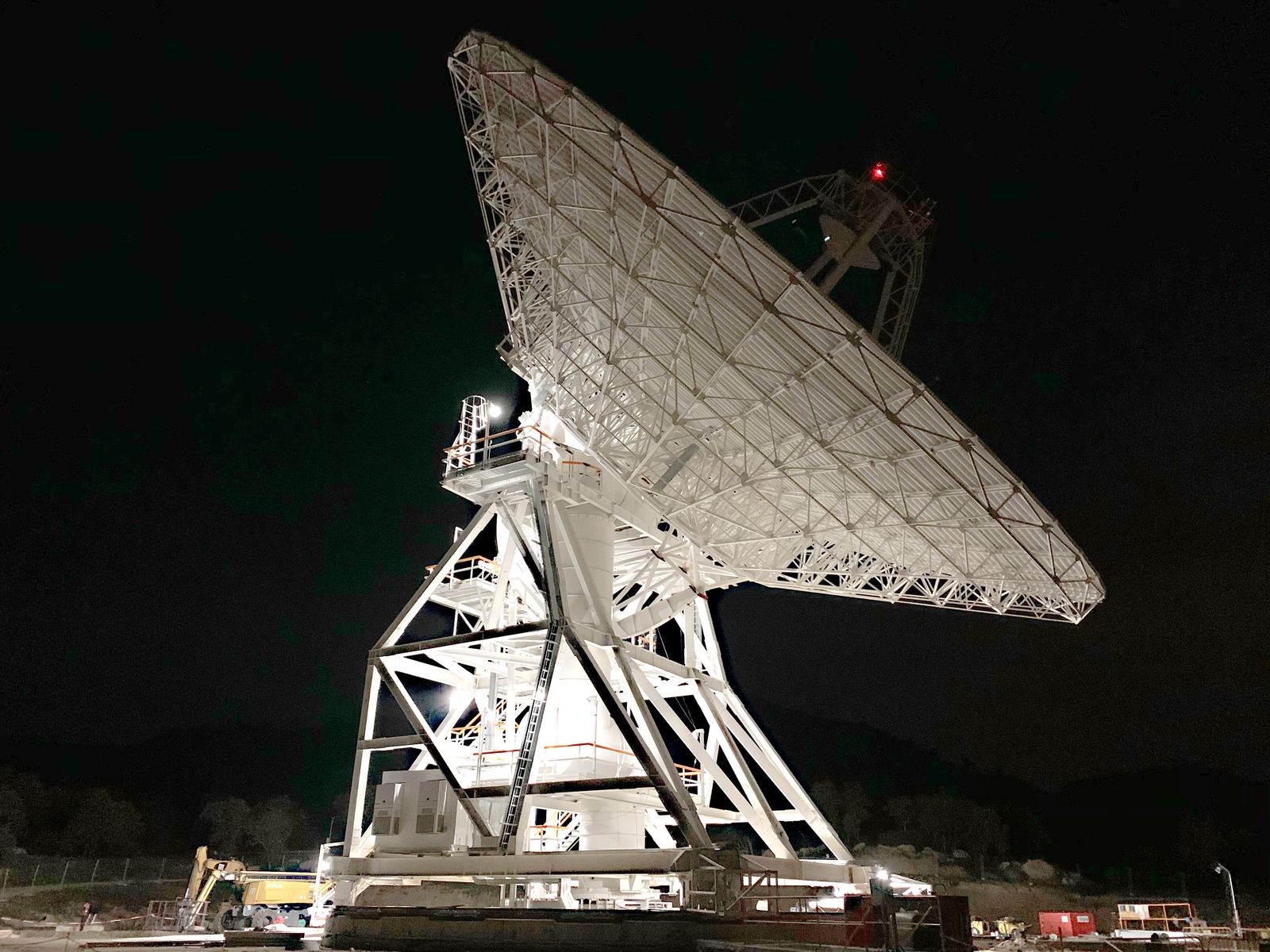
Photo credit
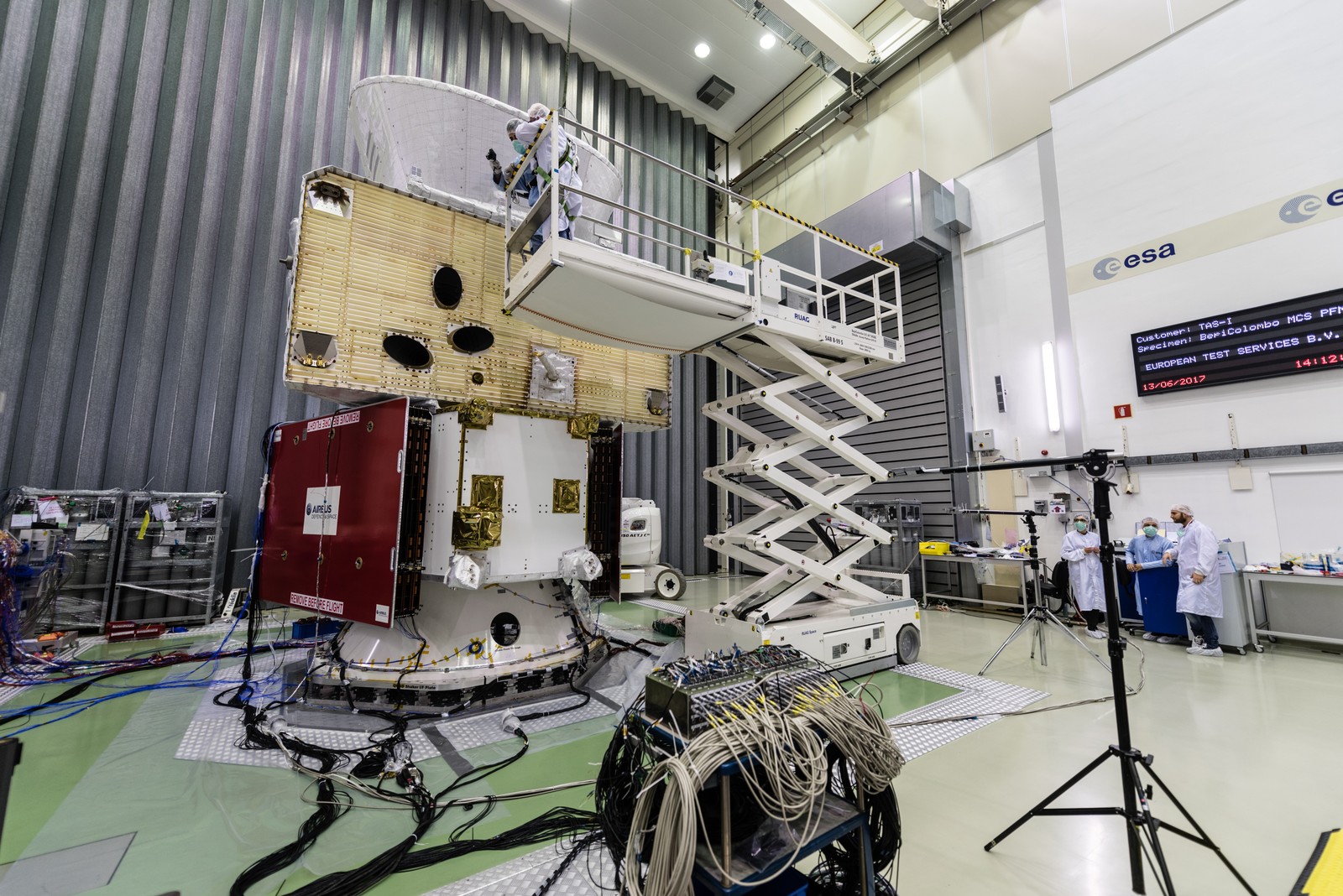
The dish near Madrid picked up Voyager 1 right on time. In California on Thursday morning, flight controller Nshan Kazaryan confirmed that the spacecraft had been a light-day from Earth when it sent that signal. The radio was working across 16.1 billion miles. Back at the Jet Propulsion Laboratory, the engineers still couldn’t read a single instrument aboard it.
They had been missing those readings since Saturday, November 14. That day a tracking station in Canberra, Australia, locked on to the carrier, the steady radio wave Voyager uses to send information. Normally the team can pull two kinds of information out of it. Scientists get measurements from the space the probe is flying through. The people who fly it get a report on the condition of the machine. Both went missing together.
Voyager has to keep its antenna pointed back at Earth as it flies. The computer in charge of pointing was doing its job, and there was a working transmitter at the other end. If either had failed altogether, there would have been nothing for the Australian dish to lock on to. The crew could start tracing the path the readings take before they reach the radio.

Photo credit
Wednesday, November 18, was the date on NASA’s one-light-day poster. The team could work that out ahead of time from years of tracking Voyager along a known path. At 5:16 a.m. Eastern on Wednesday it reached the distance a radio wave covers in 24 hours. Thursday was the first morning anyone on Earth could have heard from Voyager at that distance. The flight calculations and the arrival of the carrier were enough for Kazaryan to confirm the crossing.
Suppose the next step is to ask the flight computer for a particular piece of information. Send the command at nine on Friday morning and it reaches Voyager around nine on Saturday. Even if the computer acts on it straight away, the earliest anyone here could inspect the result is Sunday morning. If what comes back suggests a different test, the second two-day wait starts when that command goes out. NASA reckons the diagnosis alone could take weeks.
There’s also the matter of getting a dish. Voyager shares NASA’s Deep Space Network with other missions. Kazaryan, the controller who announced the distance on Thursday, helps negotiate time on that network. Mission manager Kareem Badaruddin told Space.com that another team member, Bhavana Gupta, has been writing up instructions for getting information out of the command and control systems when trouble crops up. The crew normally listens to Voyager 1 daily and sends it commands about once a week.
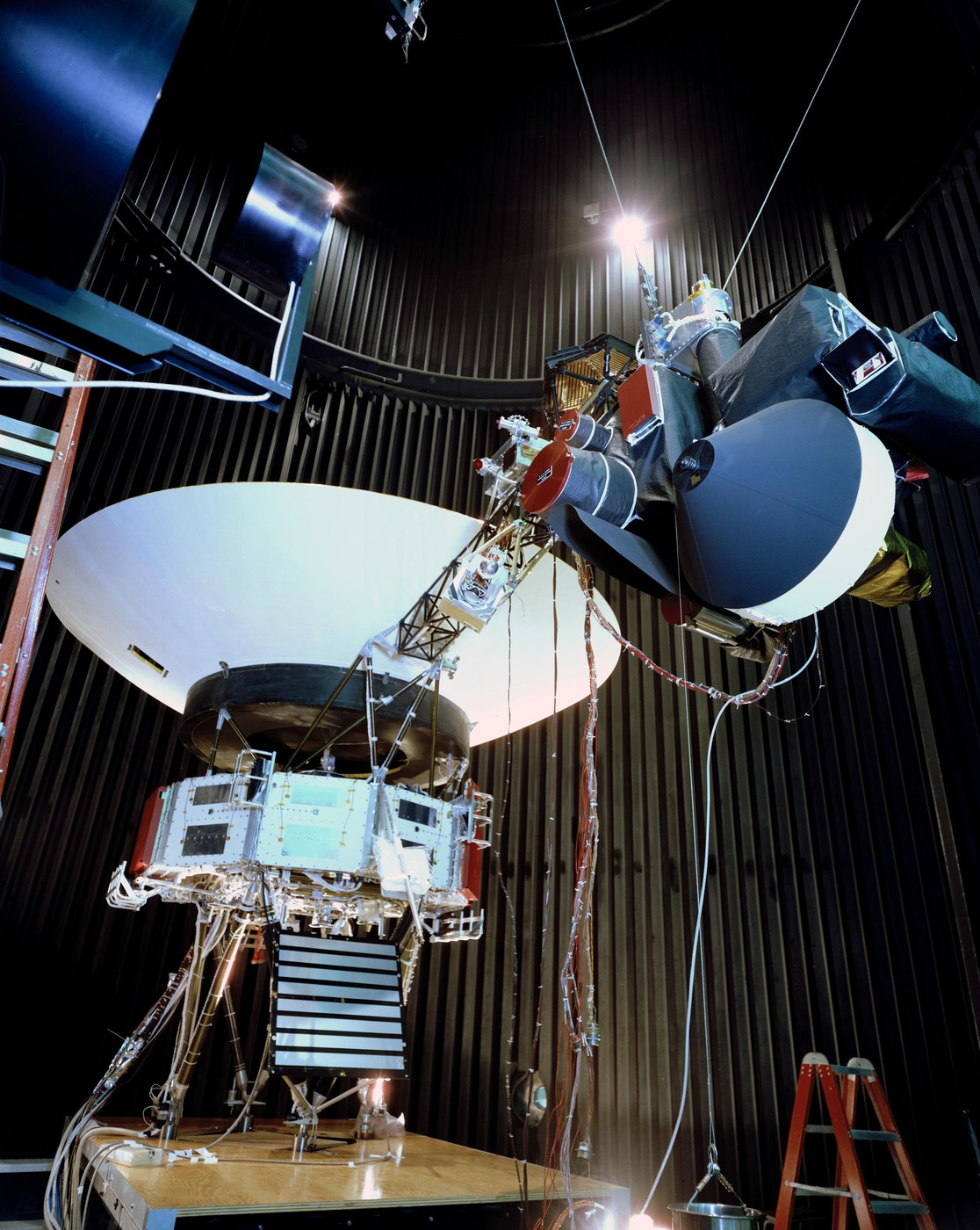
Photo credit
In October the crew lost the radio itself. Two scheduled attempts to hear Voyager went by, a day apart, without a signal. By October 20 it was back on the air. Nobody on Earth had sent it a repair command. The spacecraft had switched to backup thrusters, something its computers can do on their own when they detect trouble with the set in use. Engineers were still investigating whether those two quiet days had anything to do with November’s loss of readings.
Two science instruments were still on the power budget going into November. One measures the strength and direction of the magnetic field. The other picks up waves in plasma, the electrically charged gas around the probe. A scientist who wants to know how dense that gas is can work it out from how fast it oscillates. That reading helped settle an argument about where Voyager was long before anyone could count its distance from Earth in whole light-days.
In April 2013, a disturbance from the Sun set the plasma around Voyager 1 vibrating. The wave frequency put its density at more than 40 times what its twin had measured in the outer part of the Sun’s bubble. Scientists went back through earlier readings and found a fainter trace from the previous autumn. They could then date Voyager 1’s passage into interstellar space to August 2012. Its radio had been working on both sides of that boundary. It took a reading of the gas to tell which side the spacecraft was on.
Keeping those two instruments supplied with electricity costs the team something every year. Voyager runs on heat from decaying plutonium, and the electrical output falls by about four watts a year. In September engineers switched three devices off and three lower-power ones on. All six give off heat where they sit on the spacecraft. The crew had to make the swaps together so that saving electricity in one spot wouldn’t leave another part too cold to operate. Without that change they expected to have to switch off another science instrument as early as next summer.

Photo credit
Three years ago Voyager developed a fault that would sound familiar to anyone on duty in Canberra last Saturday. Earth could hear the transmitter, but nothing in the transmission made sense. A command sent in March 2024 got the flight computer to return the contents of its memory. That gave engineers something they could inspect on Earth. They traced the trouble to a chip that held part of the program for packing the readings together. NASA suspects that computer again. It hasn’t identified a failed part this time.
On the earlier repair, the team ran into a problem even after they knew exactly which chip was bad. There was enough spare memory to hold the instructions they needed, but there was no single free space big enough. They split the program into pieces. Each time a piece moved, they had to find the other instructions that referred to its old address and change those too. On April 18 they sent up the first change, for the part that handled reports on the spacecraft’s health. Two mornings later the team could read those reports again.
The scientists had a longer wait. On May 19 the team sent the command to restart the flow of science data. Two instruments responded on the first try. It took until June to get usable figures from all four that were running then.
Sources
- Marcia Dunn, Associated Press, on the signal received near Madrid
- Elizabeth Howell, Space.com, in conversation with the Voyager team
- JPL’s November 19 confirmation
- NASA’s November 18 engineering update
- NASA on the October radio outage and the September power savings
- NASA’s Voyager instrument list
- Voyager project scientist Ed Stone on identifying interstellar space
- NASA on finding the damaged memory in 2024
- NASA’s April 2024 repair log
- JPL’s June 2024 report on the four instruments