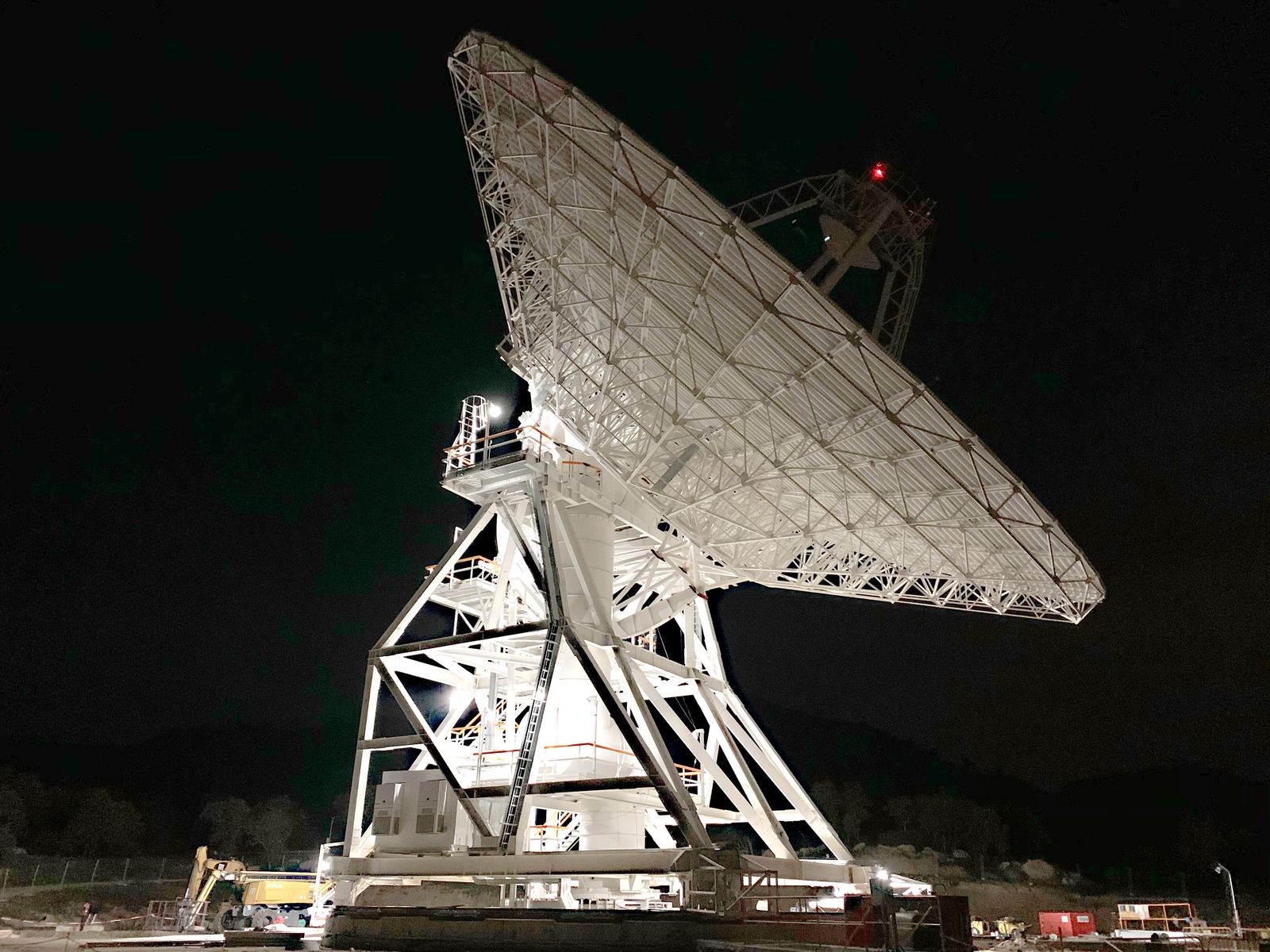
Why BepiColombo spent eight years getting ready to orbit Mercury
The spacecraft has flown past Mercury six times. Four thrusters are due to fire Saturday so it can stay.
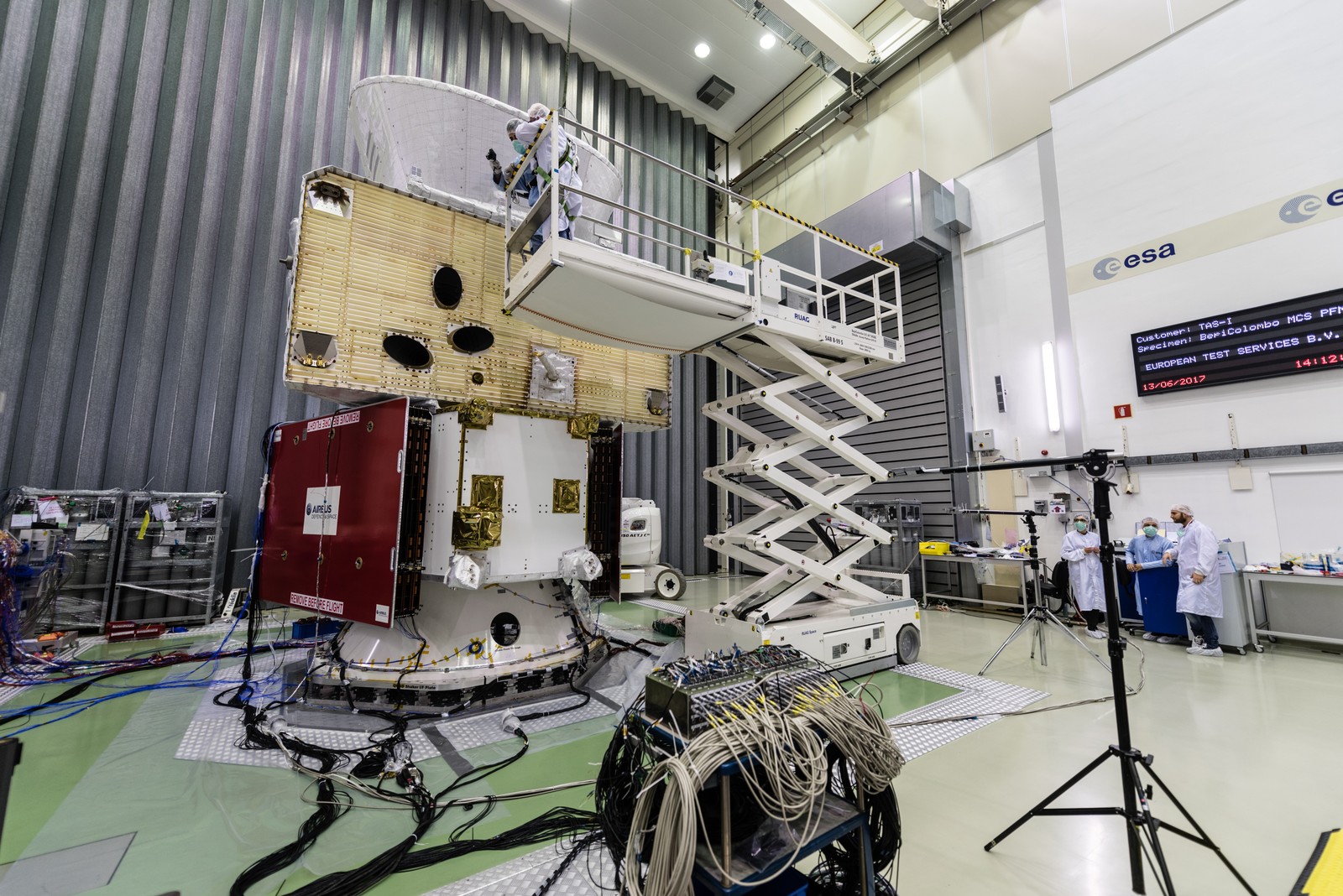
Photo credit
BepiColombo was close enough to Mercury in January 2025 to photograph the rims of craters around the north pole. The camera caught a solar panel sticking out into the black, with pitted gray ground on one side of the frame. Then the spacecraft went on its way. That was its sixth pass by Mercury. It took nearly two more years to set up a pass slow enough to stay.
The European Space Agency plans to fire four thrusters as BepiColombo approaches Mercury's south pole on Saturday, November 21. If the maneuver succeeds, the spacecraft will follow a long oval around the planet, passing over both poles. Two probes are still fastened together for the burn. One will map Mercury's surface. The other will spend more of each circuit farther out, where it can measure what the Sun does to Mercury's magnetic field.
Getting close was the easier part
Mariner 10 made it to Mercury in under five months. That was in 1974, and its first pass gave scientists a close look at a world they'd only seen from Earth. It went around the Sun and came back for two more passes. The first spacecraft to stay, NASA's MESSENGER, needed more than six years to get into orbit.
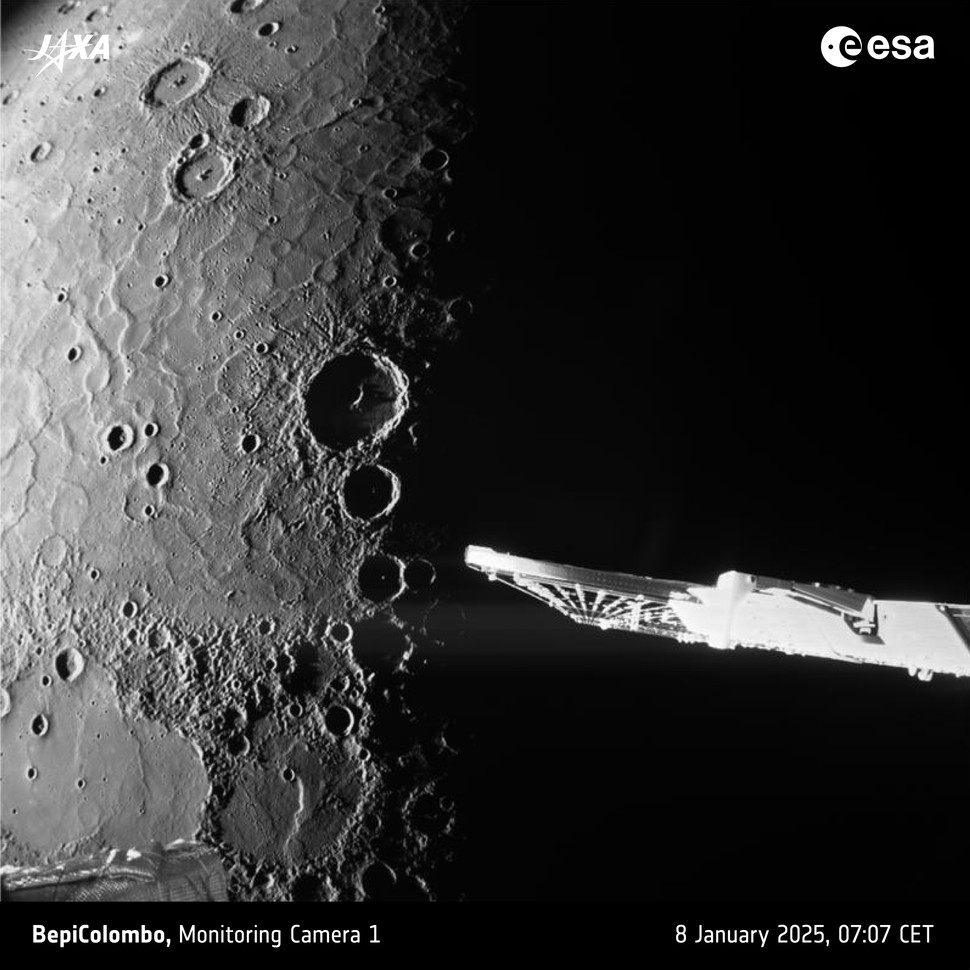
Photo credit
A rocket launched from Earth starts out moving around the Sun along with Earth. To get to Mercury it has to fall inward, toward the Sun, and it picks up speed on the way. Mercury moves fast, too. What matters on arrival is the speed of the spacecraft relative to the planet. A probe can pass close enough to take a good picture and still be moving too fast for Mercury's gravity to hold it.
BepiColombo changed its path in stages. It looped back past Earth once, swung by Venus twice and passed Mercury six times. Which side of the planet a spacecraft passes on helps determine whether it gains or loses orbital energy around the Sun. The same maneuver that sends one probe outward faster can slow another on the way in. After each flyby, BepiColombo was on a new track to meet the next planet farther along its orbit.
Between flybys, the spacecraft ran electric thrusters off a pair of solar wings. They used electricity to hurl charged xenon out the back. Each push was small, but the engines could run for weeks. In 2024, an electrical problem cut the power available to the thrusters. Engineers worked out a route that kept the mission going at lower thrust and moved the planned arrival from December 2025 to November 2026. Most of the long route was in the plan from the start. That last year was added in flight.
What comes off the spacecraft next
The part that did all that pushing is already gone. In September, ESA released the Mercury Transfer Module, the bottom section of the stack in the clean-room photo. The two probes kept going together. The four thrusters firing Saturday are on the European probe and use chemical propellant. They'll brake both spacecraft in one shot. After that, the European orbiter has more burns ahead to bring it closer to the planet.
On Earth, the first clue that the module had separated was a change in BepiColombo's radio signal. The frequency shifts when the spacecraft's speed toward or away from Earth changes. Controllers waited nearly two hours from separation to full confirmation, when data came back showing the spacecraft were in the expected configuration.
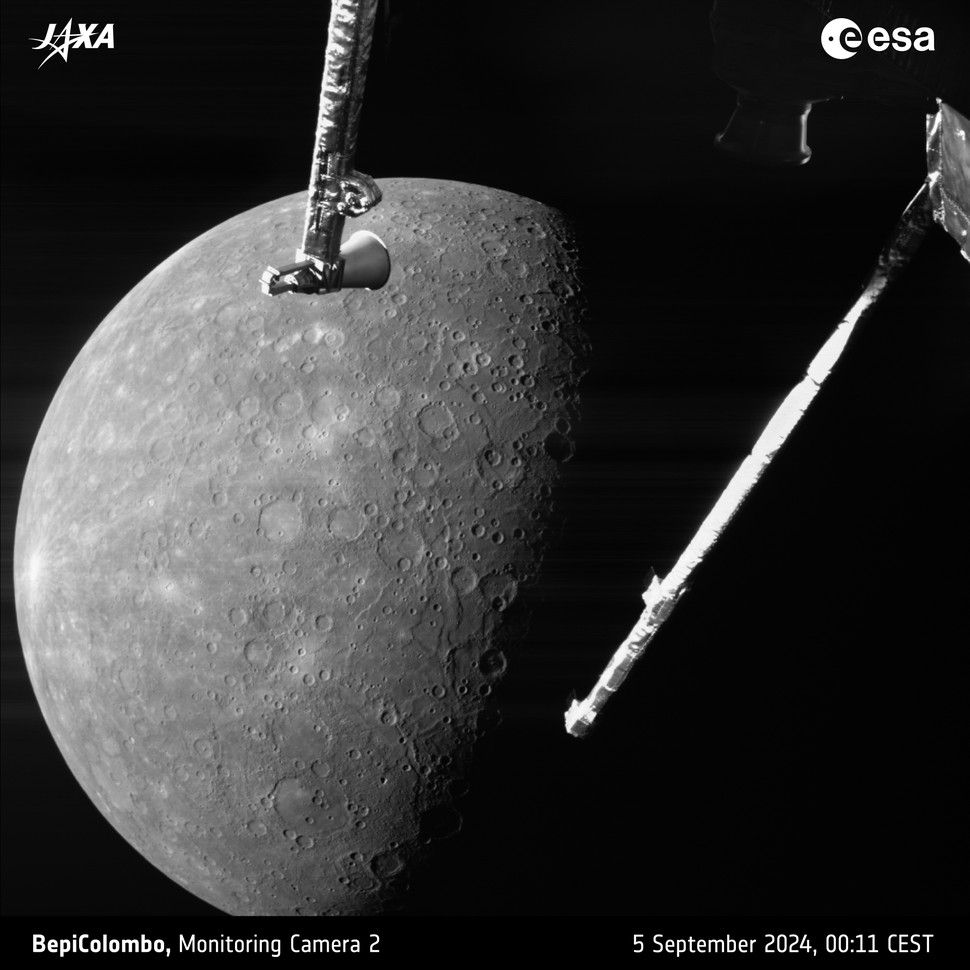
Photo credit
The first thing to come loose in Mercury orbit is Mio, the Japanese probe. ESA has its release penciled in for December 9 or 10. A week later the European probe is due to shed the shield that protected Mio from the Sun during the trip. ESA expects its own orbiter to reach its working orbit in March, with both spacecraft due to begin routine science in April. Some instruments have already taken readings during flybys or in tests along the way.
Mio can spin once it's on its own. It's designed to turn about 15 times a minute, which steadies the spacecraft and spreads the Sun's heat around its sides. While it's bolted to the European orbiter, it needs the shield because it can't turn on its own.
A trial run on the Crab Nebula
The University of Leicester released an X-ray image from a September test of the European orbiter's Mercury Imaging X-ray Spectrometer. Its team pointed the instrument at the Crab Nebula, a source of X-rays that astronomers know well enough to use as a reference. The detector had spent years in flight by the time the transfer module was out of the way and the instrument could finally see the sky.
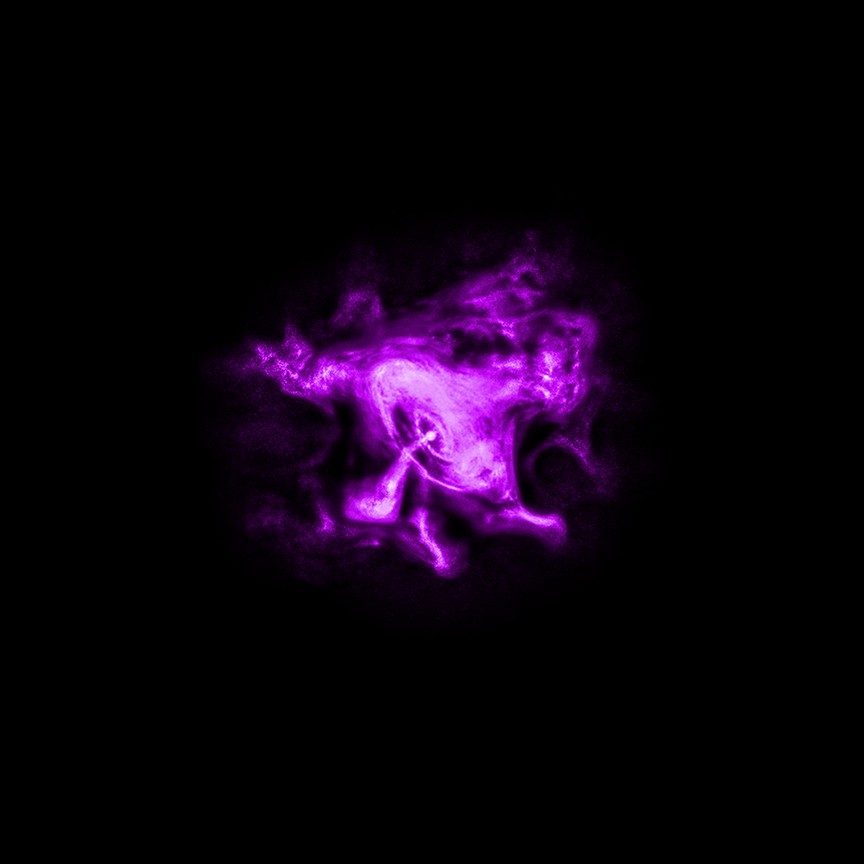
Photo credit
The team compared the September observation with measurements made in a lab in 2015. They found no radiation damage to the detector. They did see signals from cosmic rays they know how to filter and some effects they still want to study before the science phase. At Mercury, the instrument will pick up X-rays given off by the surface when sunlight strikes it. The energies of those X-rays tell scientists which elements are present. Measurements made at different places will let them compare the material in a crater with the plains around it.
What two orbits can measure
Suppose a probe measures a stronger magnetic field on one stretch of its route. It could have flown into a region where the field was stronger all along, or the field could have changed since the last reading. The stream of charged particles called the solar wind can disturb Mercury's magnetic field quickly. With readings from two places at the same time, researchers can see whether a change shows up at both spacecraft.
MESSENGER mapped the whole planet and made its closest passes over the north. Sean Solomon, who led that mission, told Space.com that this gave his team better detail there. BepiColombo's European orbiter is designed to pass lower over the south than MESSENGER did. That gives scientists a closer look at craters where the walls keep the Sun off the floor. They can check which of those floors stay cold enough to hold water ice.
Sources
- ESA’s updates on BepiColombo’s arrival
- ESA’s animation of the orbit insertion maneuver
- The Guardian’s reporting on the approach and the X-ray instrument
- Space.com’s interviews on what the orbiters can measure
- Space.com’s reporting on the change to the flight path
- Associated Press coverage of the transfer module separation
- ESA’s explanation of the Mercury flight path
- ESA’s report on the electric thrusters
- ESA’s report on the loss of power to the thrusters
- ESA’s arrival schedule
- ESA’s description of Mio and its orbit
- University of Leicester’s report on the X-ray instrument test
- The University of Leicester’s guide to the X-ray instrument
- ESA on what BepiColombo can add to the MESSENGER measurements